
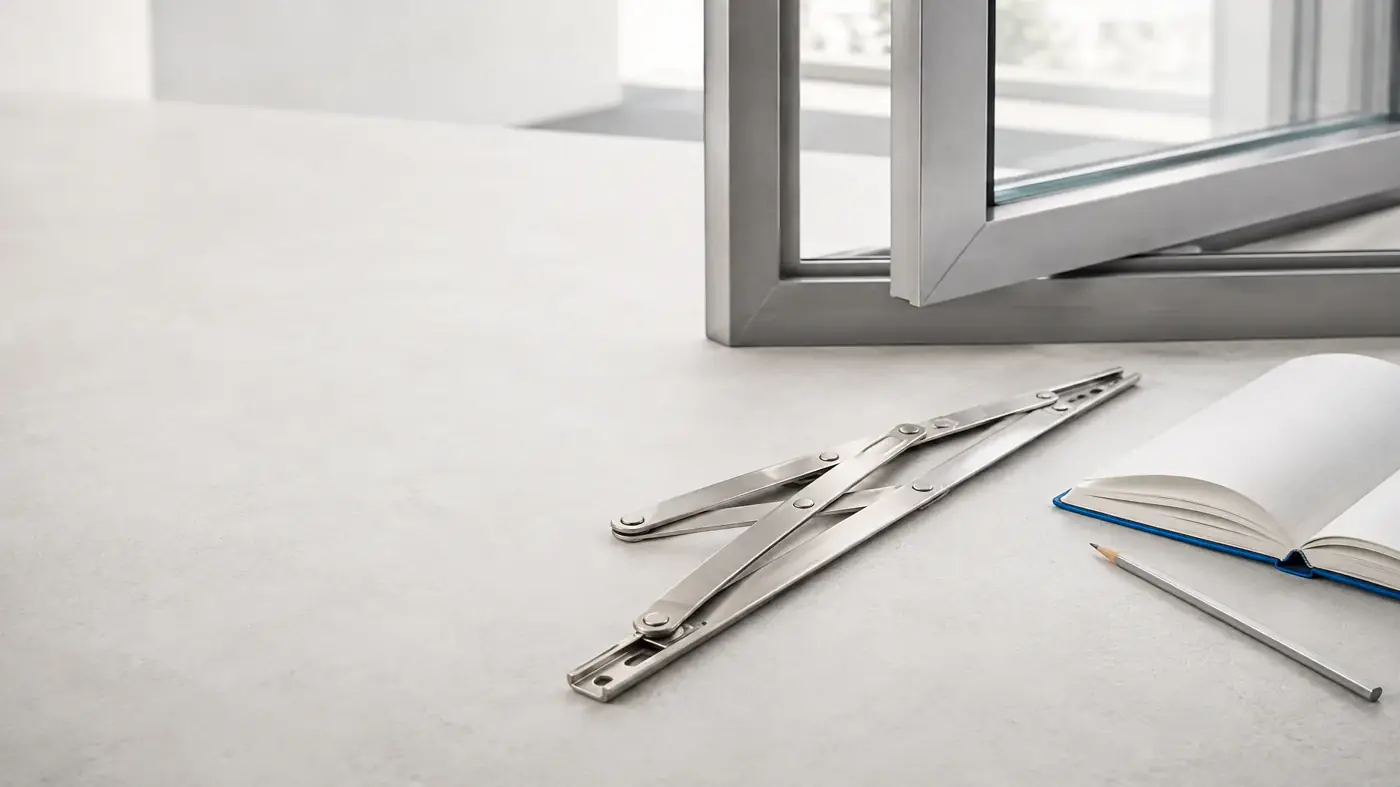
SHORT ANSWER
Choose a casement window friction stay from the complete window condition, not from the stay length or product photo alone. Confirm the opening type, aluminium profile and groove, sash size and weight, handing, finish, quantity and destination before approving a model.
This guide is for window fabricators, distributors and project buyers comparing aluminium casement window hardware for a new build, replacement programme or quotation request. It explains what to check first, where a catalogue reference is useful, and when the hardware should be reviewed against the actual profile.
The five checks to make before you choose a friction stay
Confirm whether the window is outward-opening, inward-opening, top-hung or another arrangement.
Check the aluminium section, hardware groove and available installation space.
Use the actual sash condition to review the required friction stay range.
State left or right handing, paired requirements, colour and finish expectations.
Include quantity, destination, timing and any photo, model reference or drawing available.
1. Start with the casement window, not the part name
A friction stay is one part of a window system. The same product name can be used for different applications, while a similar-looking stay may have a different track, fixing position or operating arrangement.
Begin with the window application:
- Is the sash an outward casement, inward casement, top-hung or another opening type?
- Is the stay installed on one side, as a left/right pair, or as part of a larger hardware set?
- Is the project a new window system or a replacement for an existing stay?
This first check prevents a common purchasing mistake: selecting a model because the photograph looks similar, then discovering that the profile groove or fixing positions do not match. If the opening arrangement is unclear, send a clear photo of the open sash and the existing hardware before asking for a final recommendation.
2. Confirm the aluminium profile and hardware groove
The profile section is usually more useful than a generic product description. For a reliable window hardware selection, provide the profile reference, a section drawing or a close-up showing the hardware groove. Also note the available clearance around the stay and whether the old hardware leaves a defined fixing pattern.
The following information helps a supplier check the physical fit:
- Profile or system reference, if known.
- A section drawing or straight-on photo of the groove.
- Sash and frame dimensions.
- Existing stay length, stack height or fixing details, if this is a replacement.
- Any clearance limitation caused by glass, seals, vents or adjacent components.
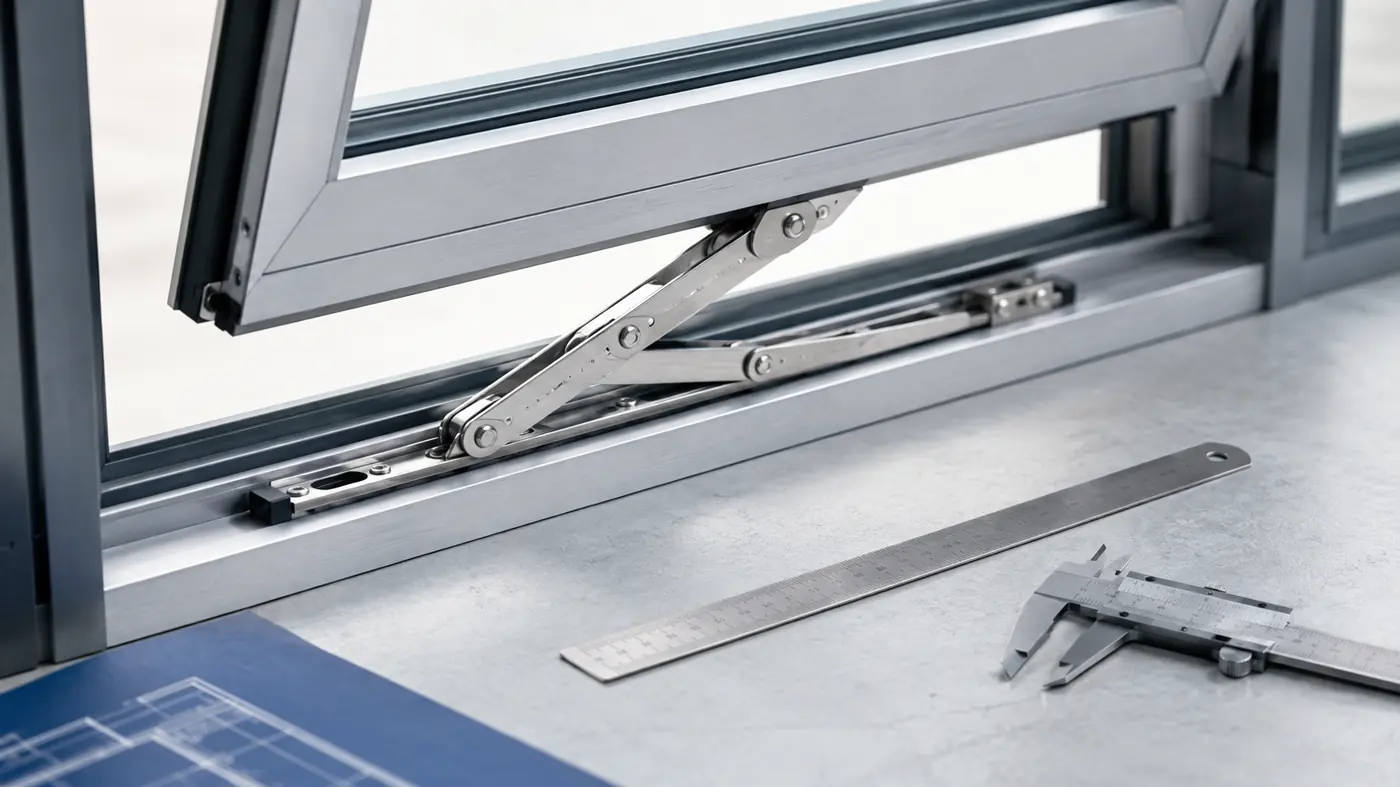
If a drawing is available, use the technical drawings library as the next reference point. If there is no drawing, a project photo plus the profile and hardware measurements is still a useful starting package.
3. Match sash weight and window geometry
Sash weight is an important selection input, but it is not the only one. The sash dimensions, opening arrangement, stay length and fixing geometry also affect whether a catalogue reference is suitable for the project.
Fenrova currently lists the following friction stay references for aluminium window hardware:
CATALOGUE REFERENCES
These are catalogue references for initial comparison, not a project approval. The final model and configuration must be confirmed against the actual profile, opening type, sash details and required quantity.
You can review these directions in the aluminium window and door hardware range. The model pages are useful for narrowing the product direction, while a matching review is still needed when the project profile or dimensions are not fully known.
4. Check handing and the complete hardware arrangement
Handing is easy to overlook when a project contains many identical windows. Confirm whether the project needs left-hand, right-hand or paired friction stays, and state whether the view is from the inside or outside when describing the opening direction.
For a replacement order, photograph the full existing stay rather than only the end of the track. Include the sash, frame, fixing points and any keepers or related components that may affect the replacement. For a new project, provide the hardware list or system drawing so the stay is reviewed as part of the complete set.
5. Confirm finish and project environment
Finish should be treated as a project requirement, not as an assumption based on a product photograph. State the requested colour or surface finish, the intended environment, the quantity and any documentation required for internal approval.
If the project is in a coastal, humid or otherwise demanding environment, ask the supplier to confirm the available finish, relevant documentation and maintenance expectations before approving a batch. Do not treat a general product image or a catalogue name as proof of a specific corrosion performance level.
What to include in a window hardware quotation request
The fastest way to obtain a useful reply is to send the same information that will be used for the matching decision. Copy this checklist into your enquiry:
- Project typeNew window system or replacement
- Window applicationOutward casement, inward casement, top-hung or other
- Profile and grooveSystem reference, section drawing or clear photo
- Sash detailsWidth, height and estimated sash weight
- Hardware arrangementSingle stay, left/right pair or complete hardware set
- Finish and quantityRequested finish, quantity and destination country
- TimingSample requirement and target delivery timing
If some information is missing, say what is unknown. A supplier can then separate a preliminary product direction from the items that still need confirmation. This is safer than treating an unverified model as a confirmed window hardware quotation.
From product direction to a matching review
Use the friction stay section when you already know the aluminium window direction and want to compare listed models. Use the system matching guide when the profile, opening type or complete set is still being identified. If you have a photo, profile, drawing or old hardware reference but not a model number, start with project matching.
The goal is not to choose the most visually similar part. The goal is to create a traceable match between the window system, the hardware configuration and the project information that supports the quotation.
Frequently asked questions
Can I choose a friction stay by length alone?
No. Length is only one input. Profile groove, fixing position, opening type, sash condition and available clearance can change the correct selection.
Is one friction stay suitable for every aluminium casement window?
No. Aluminium casement windows use different profiles and hardware arrangements. Treat a catalogue model as a starting reference until the project conditions are checked.
Do I need a technical drawing before asking for a match?
Not always. A clear photo, profile reference and basic sash information can start the review. A section drawing or existing hardware photo makes the confirmation more reliable.
What should I send if I do not know the model number?
Send the open window, the full existing hardware, the profile groove and any available measurements. Add the quantity, destination and timing so the product direction can be reviewed in a quotation context.
References
The following Fenrova resources are the most useful next steps when moving from general selection criteria to a project-specific review:
READY FOR A CHECK?
Send the window details before you place the order
Share the profile, opening type, sash information and quantity. Fenrova can then review the relevant aluminium window hardware direction and identify what still needs confirmation.
Start a project matching request →